


Key takeaways
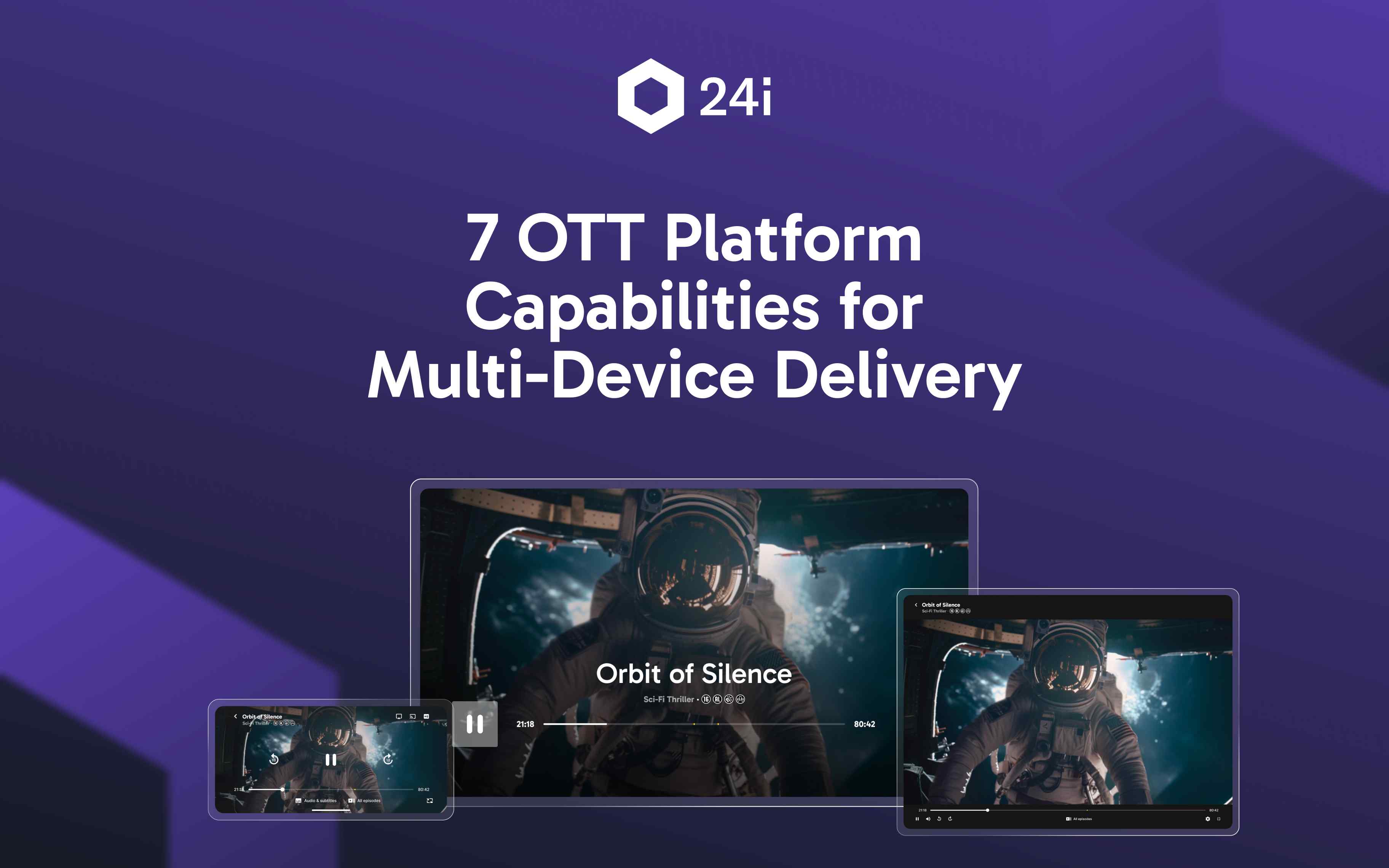
- Modern video streaming platforms need to deliver consistent experiences across smart TVs, set-top boxes, mobile devices, browsers, and connected devices.
- Multi-device streaming requires more than building individual apps, it depends on a connected backend, scalable video delivery, consistent UX, and efficient application management.
- OTT providers should evaluate device coverage alongside content management, playback, personalization, analytics, and monetization capabilities.
- A shared platform approach can help media companies reduce duplicated development and maintain consistency as device ecosystems evolve.
- The right architecture should make it easier to add new devices and capabilities without rebuilding the streaming service.
Audiences no longer watch video on a single screen.
A viewer might discover content on their phone, start watching on a smart TV, and continue later on a tablet. At the same time, traditional pay TV operators may need to support set-top boxes alongside newer OTT applications.
For OTT providers and media companies, this creates a significant technology challenge: how do you deliver a consistent streaming experience across an increasingly fragmented device landscape without multiplying development and maintenance costs?
The answer starts with choosing video streaming platforms designed for multi-device delivery.
Here are seven capabilities operators should evaluate when building or modernizing a multi-device streaming service.
1. Broad smart TV and set-top box support
Device coverage is the foundation of a multi-device strategy.
Modern streaming services may need to support environments including:
- Samsung and LG smart TVs
- Android TV and Google TV
- Apple TV
- Amazon Fire TV
- Mobile applications
- Web browsers
- Operator set-top boxes
For pay TV operators in particular, smart TV and set-top box support may need to coexist within the same service strategy.
But simply having an application available on each device isn't enough.
Operators should evaluate whether features, content, branding, navigation, and monetization can be managed consistently across those environments.
Questions to ask:
- Which device ecosystems are supported?
- How quickly can new platforms be introduced?
- Can applications share common backend services?
- How much device-specific development is required?
2. Centralized content management
Managing content separately for every application quickly becomes inefficient.
A modern video streaming platform should provide a centralized Content Management System (CMS) where teams can manage:
- Video assets
- Metadata
- Images and artwork
- Categories and collections
- Content availability
- Publishing
- Rights and territories
Updates made centrally should then flow across supported applications.
For example, changing artwork or metadata shouldn't require teams to update individual smart TV, mobile, and web applications separately.
Centralized content management reduces duplicated work while helping maintain a consistent experience across devices.
3. Scalable video delivery
Multi-device delivery also requires a video infrastructure capable of adapting to very different viewing conditions.
Someone watching over mobile data has different requirements from someone watching 4K content through a smart TV.
Scalable video delivery therefore depends on capabilities such as:
- Adaptive bitrate streaming
- Efficient transcoding
- CDN integration
- Cloud infrastructure
- Reliable video playback
Adaptive bitrate streaming is particularly important because it allows the player to adjust video quality according to available bandwidth and device capabilities.
Infrastructure should also be able to scale during major events or sudden increases in concurrent viewers without degrading the experience.
4. Consistent multi-device streaming experiences
Viewers don't think about individual applications, they think about the streaming service as a whole. They expect their experience to follow them from one screen to another.
Effective multi-device streaming should support features such as:
- Continue Watching
- Watchlists
- Viewing history
- User profiles
- Favorites
- Personalized recommendations
A viewer who pauses a program on a set-top box should ideally be able to continue from the same point on their mobile device.
Creating that continuity requires applications to connect to shared user, content, and backend services.
The objective isn't necessarily to make every interface identical. Different devices have different interaction models. Instead, the service should feel consistently recognizable and connected everywhere.
5. Flexible application management
Supporting many devices creates an ongoing maintenance challenge.
Operating systems change. Device manufacturers introduce new requirements. Streaming technologies evolve. Applications need new features.
If every app is managed as a completely independent product, engineering requirements can grow quickly.
OTT providers should therefore consider how efficiently a platform enables teams to:
- Update applications
- Change branding
- Modify navigation
- Introduce features
- Manage configurations
- Test new releases
The more that can be managed centrally, the less time teams need to spend maintaining individual applications.
For mid-sized media companies especially, this can make the difference between continuously innovating and spending most development resources simply keeping existing applications operational.
6. Integrated monetization and personalization
A consistent experience doesn't mean every viewer should see exactly the same thing.
Modern streaming services increasingly personalize both content and monetization.
A multi-device platform should be able to support business models such as:
- SVOD
- AVOD
- FAST
- TVOD
- Hybrid subscription and advertising
Advertising capabilities may include Dynamic Ad Insertion (DAI), ad server integrations, and audience targeting.
At the same time, personalization can adapt content discovery according to viewing behavior and audience preferences.
Connecting these capabilities across devices is important.
A subscriber's entitlements, preferences, and personalized experience shouldn't disappear simply because they move from mobile to a smart TV.
7. Unified analytics and platform visibility
Every device creates valuable information about how audiences use a streaming service.
But if smart TV, mobile, web, and set-top box data remain in separate systems, understanding the complete viewer journey becomes difficult.
Video streaming platforms should provide visibility across:
- Viewing behavior
- Content engagement
- Device usage
- Playback performance
- Application performance
- Advertising
- Subscriber activity
This gives operators a clearer understanding of both the viewer and the service.
For example, analytics can reveal whether playback problems are concentrated on a particular smart TV platform or whether certain audiences regularly move between devices.
These insights can then inform product, content, and technology decisions.
Why platform architecture matters for multi-device delivery
These seven capabilities are closely connected.
Applications depend on content management. Personalization depends on viewer data. Reliable playback depends on video workflows and content delivery. Analytics need visibility across all of them.
When these functions operate as disconnected systems, each new device can add another layer of integration and operational complexity.
A more connected architecture allows common capabilities to serve multiple applications and screens.
For OTT providers, media companies, and pay TV operators, this can help:
- Reduce duplicated development
- Maintain consistent experiences
- Simplify application management
- Launch new devices faster
- Scale audiences more efficiently
- Adapt as the device landscape changes
The goal isn't simply to support as many devices as possible. It's to make multi-device delivery sustainable.
Multi-device streaming with 24i Video Cloud
At 24i, multi-device delivery is designed as part of the wider streaming platform rather than as a collection of disconnected applications.
24i Video Cloud connects applications with content management, video workflows, personalization, monetization, and data within a unified ecosystem.
This helps OTT providers, media companies, and pay TV operators:
- Deliver experiences across smart TVs, set-top boxes, mobile, and web
- Manage content and application experiences centrally
- Maintain consistency across device ecosystems
- Support scalable video delivery as audiences grow
- Connect personalization and monetization across screens
- Evolve services without rebuilding the underlying platform for every new device
This approach is particularly valuable for operators that need the flexibility to support both traditional Pay TV environments and modern direct-to-consumer streaming experiences.
Conclusion
Multi-device delivery has become a fundamental requirement for modern streaming services.
But supporting more devices shouldn't mean multiplying complexity.
When evaluating video streaming platforms, operators should look beyond a simple checklist of supported devices. The underlying platform needs to connect content management, scalable delivery, applications, user experiences, monetization, personalization, and analytics across every screen.
For OTT providers, media companies, and pay TV operators, the right platform architecture can make it easier to deliver consistent experiences today while adapting to the devices and viewing behaviors of tomorrow.
With 24i Video Cloud, these capabilities come together within a connected platform designed to help operators manage and scale streaming experiences across devices.
FAQs
What capabilities should a video streaming platform have for multi-device delivery?
A modern platform should provide broad device support, centralized content management, scalable video delivery, consistent user experiences, efficient application management, flexible monetization, and unified analytics.
What is multi-device streaming?
Multi-device streaming allows viewers to access a streaming service across different devices, such as smart TVs, set-top boxes, smartphones, tablets, and browsers, while maintaining a connected experience.
Why is smart TV and set-top box support important?
Large-screen devices remain central to premium video consumption. Supporting both smart TVs and set-top boxes allows OTT providers and pay TV operators to serve traditional and streaming-first audiences.
How can OTT providers maintain a consistent experience across devices?
Using shared backend services for content, user profiles, entitlements, personalization, and application configuration helps operators maintain consistency without managing every device completely independently.
Why is scalable video delivery important?
Audience demand and network conditions can change significantly. Scalable infrastructure, CDNs, transcoding, and adaptive bitrate streaming help maintain reliable playback as viewing demand grows or fluctuates.
How does 24i support multi-device streaming?
24i Video Cloud connects applications, content management, video workflows, personalization, monetization, and data to help operators deliver and manage streaming experiences across smart TVs, set-top boxes, mobile devices, and web applications.
Download Our Ebook


